For over a century, the British Board of Film Classification has served as the guardian of cinema standards in the UK. Established in 1912, the BBFC remains the independent, not-for-profit regulator responsible for classifying content before it reaches British cinema screens. With rare exceptions for one-off screenings and film festivals (which can be approved by local councils), virtually everything shown in UK cinemas must first pass through the BBFC's screening rooms in Soho Square.
It's a remarkable responsibility. In 2024 alone, the organisation classified 1,256 films and 1,047 trailers, screening between 20 and 30 unique titles each week. But unlike commercial cinema operations, the BBFC faces distinct technical challenges. Their compliance team must scrutinise content with forensic attention to detail, often reviewing sequences multiple times to ensure ratings accurately reflect what audiences will experience. They need to view cinema content exactly as the public will see it, yet with the capability to examine individual scenes with far greater precision than a typical cinema viewer.
"We need to view cinema content in the same way that the public will see it," explains Joe Slatter, Infrastructure and Workflows Team Lead at the BBFC. "This ensures that our ratings accurately reflect the experience that cinema audiences will have. The technology we use therefore needs to match that found in cinemas. However, we also scrutinise films viewed in our theatre in much more detail than regular viewers might." Individual sequences might have to be watched and re-watched several times, before the evaluation goes into the overall report for the film or the trailer.
The Challenge of Multiple Formats
The BBFC's technical requirements extend well beyond standard cinema exhibition. Content arrives at different points in the production cycle and through various channels. Whilst the majority comes as a DCP (Digital Cinema Package), the team must also handle video files, streaming links, and 3D titles. Formats such as IMAX and ScreenX require screening at external facilities, but the core screening rooms at Soho Square must accommodate everything else, which means between four and six films, plus trailers and ads, each day between 9am and 6pm.
The daily workflow involves ingesting different slates of films into the projection system, with content arriving via dedicated services like Lansat and Qubewire, as well as downloads from numerous other sources. This creates significant data transfer demands across the network. The organisation has responded by installing 10Gb network switches to handle the volume, but the screening infrastructure itself needed modernisation to keep pace with both the industry and the workload. This is where the BBFC turned to the CinemaNext UK team for the second time in two years.
A Comprehensive Technology Upgrade
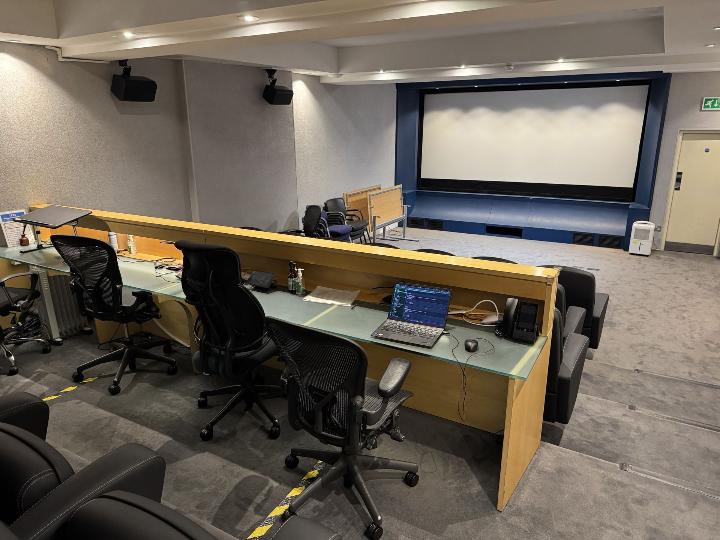
Working with CinemaNext, the BBFC recently completed a substantial upgrade to Screen 1, their main screening theatre. The project centred on three key objectives: upgrading the audio system to match modern cinema standards, extending the life of their projection equipment whilst improving image quality, and streamlining the operational workflow through intelligent automation.
The audio transformation represents perhaps the most significant change for the compliance team. The previous 5.1 sound system has been replaced with a full QSC Q-SYS Core 8 Flex processor delivering 7.1 audio processing.
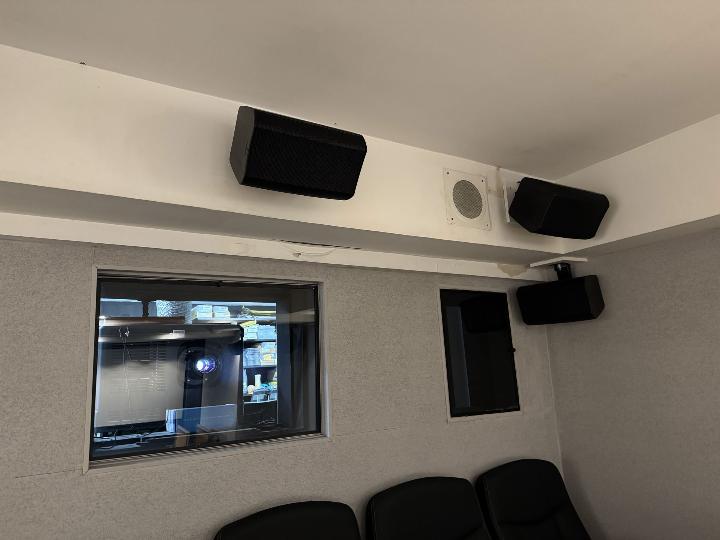
"The Q-SYS system is 7.1, enabling our compliance team to review films in a format consistent with commercial cinema audiences," notes Slatter. The system includes three QSC SC-2150 three-way screen speakers, twelve QSC AD-S6T surround speakers with custom ceiling brackets, two QSC SB-2180 dual subwoofers, and two QSC CX-Q 4K8 amplifiers providing 8 x 500W of power.
Intelligent Control and Automation
Beyond the audio hardware, the Q-SYS platform enables a fundamentally different way of working, unique to the BBFC. Two QSC TSC-70-G3 touchscreen controllers were installed, one in the projection booth and one in the screening room itself, each with custom menus tailored to specific use cases. These allow users to control sound, playback, and lighting, with additional controls available in the projection booth.
"The touchscreens have been very useful as they allow those in the screening room to control the sound and lighting themselves, cutting out a lot of unneeded communication between viewing staff and the projection team," Slatter explains. "The ability to control DCPs from within the screening room has also been very useful when we have needed to review specific sections of a film for the compliance team. As we can now be in the same room, communication becomes much easier." Previously the reviewers had to wave to the projectionist/technical operator through the porthole glass.
The CinemaNext PAA20+ automation adapter serves as the integration hub, connecting the Q-SYS audio platform with the projection and lighting systems. Crucially, this means the LED house lighting system (part of the broader infrastructure upgrade) can now be controlled directly via the Q-SYS touchscreens from either the projection room or the screening room itself. The BBFC need to be able to not just see the film on the screen, but also their notes and laptops.
Laser Upgrade: Extending Life, Improving Quality
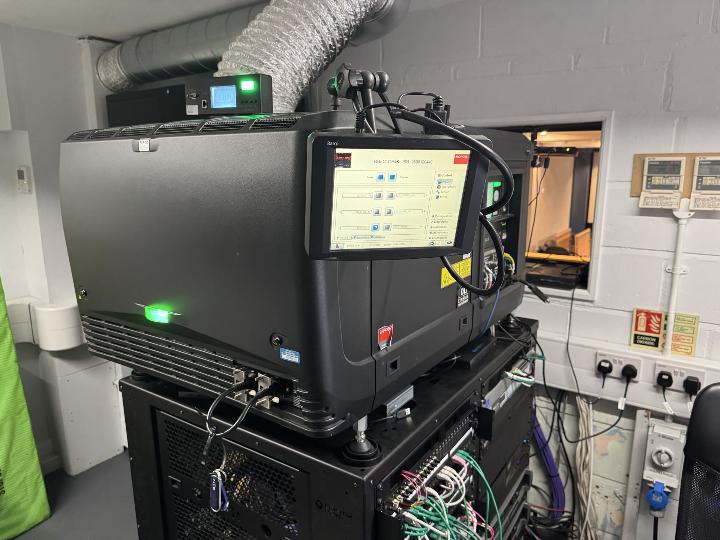
Rather than replacing their seven-year-old Barco DP4K-17B projector entirely, the BBFC opted at CinemaNext’s suggestion for Barco's laser light upgrade kit. It proved an astute decision for a non-profit organisation mindful of both capital expenditure and ongoing operational costs.
"Adding the laser upgrade made sense in that it extended the life of the projector, improved the picture quality and reduced costs in terms of power consumption and new lamps no longer being needed," Slatter points out. The laser system also delivers improved brightness and consistency whilst eliminating the recurring expense of lamp replacements. For an organisation that screens 20-30 films per week, the operational savings add up quickly, and the enhanced image quality ensures the compliance team can examine content with the clarity it demands.
The technology upgrade formed part of a wider refurbishment of the cinema infrastructure, including a complete reinstallation of the projection booth with new power and network cabling. The aging screening room lighting system was replaced with LED fixtures, integrated with the Q-SYS control system to enable management from within the screening room itself. Network switches and projection equipment was reinstalled in the projection booth allowing for a fresh installation of cabling.
Emergency lighting was also installed in Screen 1, alongside LED lighting on the viewing benches, for screening sessions where examiners need to take detailed notes whilst maintaining focus on the content.
Dual-Screen Capability
The Screen 1 upgrade follows CinemaNext's installation of a second screening room in 2024, which has dramatically improved the BBFC's operational capacity. Film distributors require quick turnaround times before theatrical release, and the organisation had previously relied on external screening rooms during busy periods, incurring both costs and logistical complications, not least given the security requirements of handling completed pre-release Hollywood blockbusters.
"The addition of a second screen has vastly improved the BBFC's workflow," Slatter confirms. "Investing in a second screening room in our offices allowed us to increase screening capacity and so reduce turnaround times. We also ultimately reduced costs by removing the need to go to external screening rooms."
The second screen has also proven invaluable for senior staff who need to review specific scenes or trailers that have been referred to them. Rather than waiting for the main theatre to become available, they can quickly set up and send content to Screen 2, enabling faster response times for time-sensitive decisions.
Future-Proofing for Emerging Formats
The BBFC's approach to technology mirrors the pragmatism of the wider UK exhibition sector. As Slatter explains, "The BBFC is led by the film industry and so we upgrade our cinema equipment as new formats emerge." Previous examples include the transition from 35mm to digital projection, and the introduction of 3D and high frame rate cinema capabilities when selecting their current Barco projector.
Whilst physical constraints thus prevent them from accommodating special formats like ScreenX (which requires larger auditoriums), the organisation remains responsive to industry developments. The modular nature of the Q-SYS audio platform and the automation infrastructure mean the system can evolve alongside emerging formats such as immersive audio and HDR, ensuring the BBFC's classification decisions continue to reflect the actual cinema-going experience (minus the popcorn).

Partnership and Results
Andre Mort, Technical Director at CinemaNext UK, reflects on the successful collaboration: "We were delighted to deliver the recent technology upgrade to BBFC Screen 1, which included a full transition to a Q-SYS audio system and the installation of a laser light upgrade kit into the existing Barco 4K projector. The new Q-SYS platform allows certifiers to easily control playback and routing throughout the room, whilst the CinemaNext PAA20 ensures seamless automation and operational efficiency. Combined with the laser upgrade, these improvements enhance brightness, consistency and long-term sustainability, whilst also maximising the value of BBFC's existing equipment," making the project more cost-effective.
Mort adds: "It was fantastic working once again with Joe Slatter, Felix Hockey and the wider BBFC team, particularly following the successful installation of their second grading screen last year. We are proud to continue supporting BBFC in maintaining world-class screening environments for their internal teams and industry partners."
For an organisation that has safeguarded cinema standards for 113 years, the technology upgrade represents more than just new equipment. It's about ensuring the BBFC can continue fulfilling its mandate with precision and efficiency, viewing content exactly as audiences will experience it, whilst adapting to the technical demands of modern film production and exhibition. The combination of reference-quality projection and audio, intelligent automation, and flexible operational control means the classification process can focus on what matters most: protecting audiences whilst supporting the creative freedom of filmmakers.
Maintaining Standards: How CinemaNext Upgraded the BBFC's Screening Infrastructure for the Digital Age