There was a time, not so long ago, when the most exciting innovation at the concession stand was the introduction of sliders as a hot alternative to the old hot dog or, perhaps, new versions of caramelized popcorn in tiny packaging. Those days are gone. In 2024 and 2025, the humble popcorn vessel graduated from a disposable cardboard tub to a viral marketing weapon, a collector's item, and - crucially for exhibitors’ bottom line - a significant driver of per-capita spend. We are now living in the age of the "Event Bucket." And for cinema operators, it's no longer just about selling snacks, but selling a piece of the experience itself.
If you want to pinpoint ground zero for this seismic shift, look no further than the sandworm. The unintentionally (?) risqué Dune: Part Two bucket didn't just hold popcorn; it held the internet's attention for a solid fortnight. It became a meme, a talk-show topic (Jimmy Kimmel had an absolute field day), and a must-have artifact that sold out within hours at most locations. Warner Bros. and Legendary Pictures stumbled onto something extraordinary: a $30 piece of plastic that generated more social media impressions than some of their actual marketing campaigns or stars. (Sorry, Timothée.)
Since then, the floodgates have opened. We've seen Deadpool & Wolverine's head-shaped buckets (both of them, naturally), Beetlejuice Beetlejuice's sandworm design (because apparently sandworms were the shape of 2024), and Gladiator II's Colosseum vessel. The strategy has become clear: transform the concession purchase from a sunk cost into a take-home asset. For exhibitors, this is the holy grail. Box office splits are brutal - 60/40 in the studio's favour on a tentpole opening weekend, sometimes worse- but the margin on a £25 or $30 plastic collectable? That's where the lights stay on.
AMC Entertainment reported that their specialty F&B items (which includes these collectibles) drove a 12% increase in concession per-caps during Q1 2024 compared to the prior year. That's not a rounding error as much as a business model shift.

The Vendors Behind the Curtain
Whilst the studios provide the IP, the heavy lifting is done by the specialist vendors who design, manufacture, and distribute these intricate pieces of plastic engineering. Companies like Golden Link Inc. have long been the quiet titans of this space, bridging the gap between Hollywood's creative assets and the cinema lobby. Their ability to turn a PDF style guide of a film (heavily under NDA) into a tactile, light-up, multi-functional object - often with moving parts and electronics - is what makes this market tick.
Golden Link has been manufacturing theatre concession novelties for decades, but their current output bears no resemblance to the simple printed cups of that era. We're talking about injection-molded pieces with multiple components, LED arrays powered by watch batteries, and food-safe coatings that can survive both the dishwasher and the scrutiny of a particularly dedicated Reddit thread dissecting every detail.
They aren't alone. The Zinc Group and Snapco (a joint venture that was by the Snap Creative of California and the PCO Group of Germany in 2009) have also been instrumental, pushing the boundaries of what a "cup" or "tub" can be. The Zinc Group, for instance, did the infamous Dune bucket. Snapco specialises in rapid-turnaround licensed products, making them the vendor of choice when a studio decides late in the marketing cycle that they absolutely must have a bucket.
We're seeing a move away from simple printed tins (though those still have their place) to complex injection-molded dioramas. These vendors are effectively toy manufacturers now, operating within the theatre supply chain. The production lead times can be six months or more for a complex design, which means these decisions are being made long before the first trailer drops.
The Class of 2025: A Case Study in Plastic
The slate for late 2025 offers a masterclass in how different demographics are being targeted through polymer.
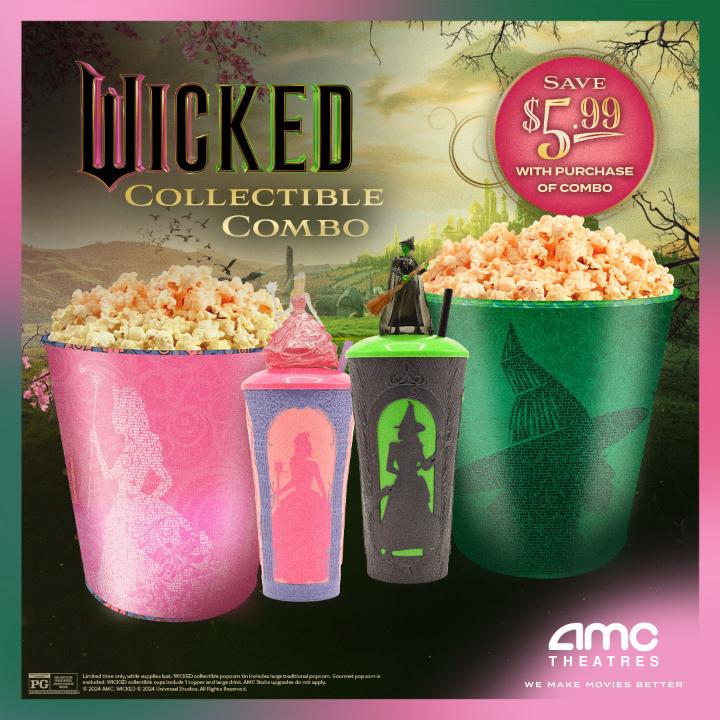
Wicked: For Good - Universal didn't just release a movie; they released a colour-coded lifestyle. Cinemas have been flooded with pink and green merchandise, from "Glinda" pink tumblers to "Elphaba" green light-up buckets. The genius here is the "collect-them-all" mentality. You don't just buy popcorn; you pick a side. Operators like Odeon and AMC have capitalised on this with "dual-chamber" cups, effectively doubling the SKU count and the fan engagement. Some venues reported customers buying both buckets without even ordering popcorn to fill them - they were purchasing empty vessels as display pieces.
The Wicked merchandise strategy also cleverly tapped into the existing Broadway fandom. These aren't just casual moviegoers, as many had already spent hundreds on stage tickets. A £28 light-up bucket? That's a bargain in comparison.
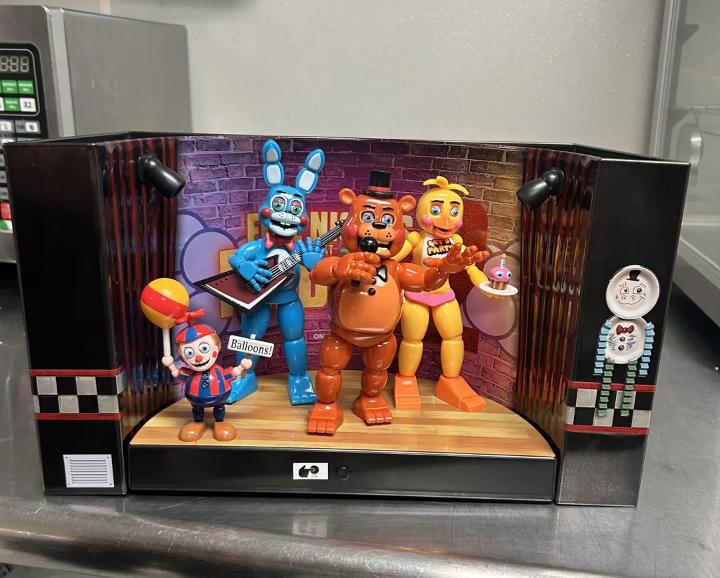
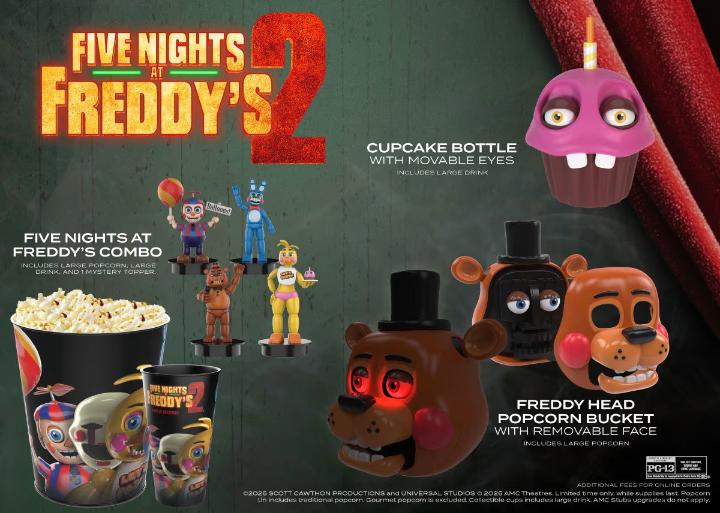
Five Nights at Freddy's 2 - The leak of the FNAF 2 popcorn bucket sent shockwaves through Reddit and TikTok in early December. Rather than just a humble bucket, it's a diorama. The design - featuring the animatronic characters on a detailed stage - barely leaves room for the popcorn. But that's entirely the point. The utility is secondary to the display value. For the rabid FNAF fanbase, this is a limited-edition statue that happens to come with a side of butter flavour.
What's particularly interesting here is the demographic: Gen Z and younger millennials who grew up with the game series. These are collectors who are used to limited drops and resale markets. Blumhouse and Universal essentially turned the cinema lobby into a pop-up toy store for a generation that treats physical media as sacred objects in an increasingly digital world.
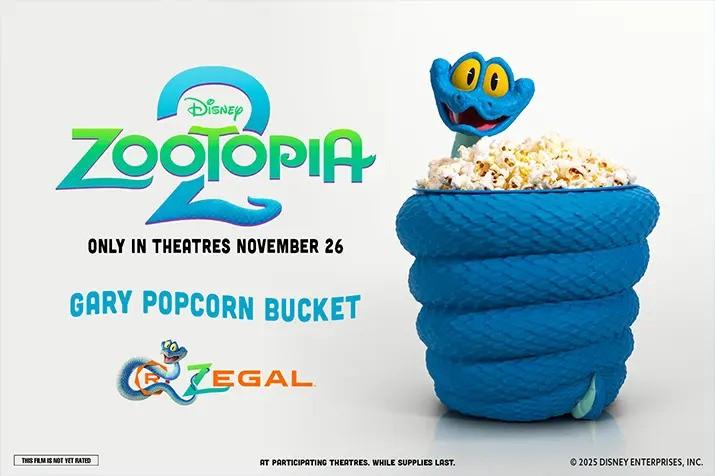
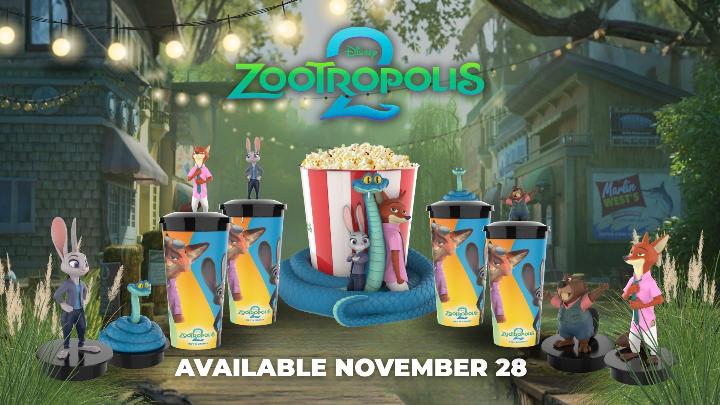
Zootopia 2 (or Zootropolis 2 for those of us on this side of the Atlantic) - Disney is leveraging character toppers and clip-on figurines. It's a classic play: the "kid tax." You can buy the regular combo, but good luck explaining to a six-year-old why they can't have the Judy Hopps figurine topper that clips onto their drink. It turns a passive movie trip into an active toy hunt. Disney has mastered this approach over decades (remember the Incredibles 2 light-up cups?) but they've now refined it to an art form. The Direct even has a page devoted to tracking all of the Zootopia 2 popcorn buckets.
The character toppers also serve a secondary function: they're tradable. Kids (and let's be honest, adult collectors) can swap them, creating a social element that extends beyond the cinema visit. It's merchandising meets playground economics 101.
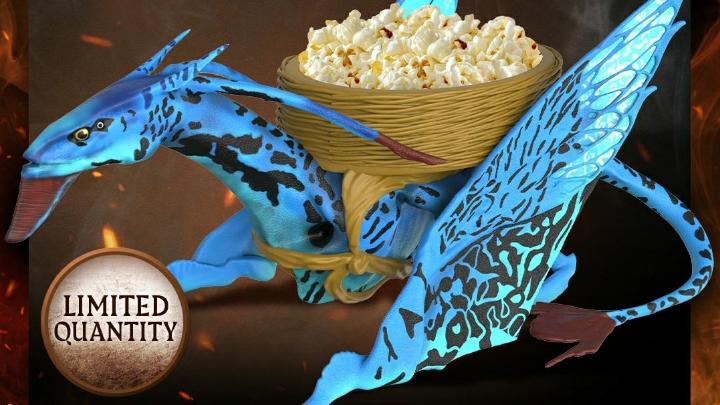
Avatar: Fire and Ash - James Cameron doesn't do small, and neither does the merchandise. We're seeing high-premium items coming down the pipeline: Banshee-shaped vessels and textured, LED-lit containers that command eye-watering price points (early reports suggest some locations may charge upwards of $35-40). These are designed for the premium large format (PLF) crowd; the audience already willing to pay $25 for IMAX or Dolby Cinema is the exact demographic that will drop $40 on a souvenir vessel to commemorate their return to Pandora.
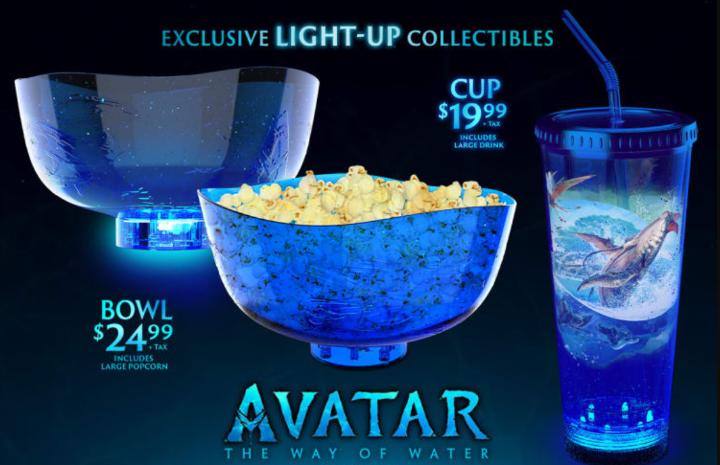
Disney and 20th Century Studios are reportedly working with multiple vendors to create regionally exclusive designs, which adds another layer of FOMO for the international collector community. The Chinese market, in particular, has proven hungry for exclusive variants - remember the unique light-up Avatar: The Way of Water bowls that appeared in AMC cinemas?
The Implications for Exhibition
So what does this mean for the cinema manager on the ground?
Inventory is King - The days of "just ordering popcorn sacks" are over. Managing stock levels of limited-edition merchandise is a logistical high-wire act. Order too few, and you have angry fans (and scalpers flipping them on eBay for three times the retail price). Order too many, and you're storing pallets of unsold plastic that can't be returned to the vendor. Cineworld reportedly had to rent additional storage space at several locations just to house Barbie merchandise during that film's run.
The inventory challenge is compounded by studios often being unable to provide accurate projections. They don't know if a film is going to over-perform, and by the time it does, it's too late to order more buckets. The production and shipping timelines mean what's in the building on opening weekend is essentially all you're getting.
The FOMO Factor - Cinemas are learning to weaponise "Fear Of Missing Out." By marketing these items as "while stocks last" exclusives, they drive pre-sales and opening weekend footfall. It turns the cinema lobby into a retail destination in its own right. Vue has started using social media to announce when specific buckets arrive at individual locations, creating a real-time treasure hunt dynamic that gets people through the door.
Some circuits have experimented with online pre-orders for collection on arrival, though this creates its own operational headaches. Do you hold stock for pre-orders? What if people don't collect? It's retail management in an industry that historically hasn't had to think like retailers. Popcorn will always sell out and so will be cardboard boxes it comes in, but metal boxes are dependant on the IP adorning it.
Scalping and Security - It's a strange timeline where cinemas need to limit "buckets per customer" to stop scalpers, but here we are. AMC implemented a two-bucket limit during Dune: Part Two, and several UK circuits followed suit for subsequent releases. It proves the demand is real, but it also creates a customer service friction point that staff need to be trained to handle diplomatically.
There have been reports of staff members allegedly setting buckets aside for themselves or friends, creating internal shrinkage problems. Some operators have had to implement the same inventory controls they'd use for alcohol or tobacco products. The secondary market on eBay and Facebook Marketplace is robust enough that a cinema worker could theoretically make more selling buckets than they earn in a shift - which is both a testament to the value of the product and a potential HR nightmare.
Staff Training and Theatre Operations - There's also the practical matter of explaining to a seasonal employee why they need to check if a bucket is in stock before confirming a pre-order, why they can't just "go look in the back" when they're out (there is no back - what's on the shelf is it), and why no, they can't sell the display model to that very insistent customer offering cash.
The Environmental Elephant in the Room
Of course, we should acknowledge what nobody in the industry particularly wants to discuss: these are large, single-use plastic items being produced by the millions. Whilst some collectors genuinely keep and display them, a non-trivial percentage likely end up in landfill within months. And the un-popular IP ones definitely do. The sustainability optics aren't great, particularly for an industry trying to improve its environmental credentials.
Some circuits have experimented with offering discounts on refills if customers bring their buckets back on subsequent visits, though uptake has been modest. The tension between collectibility (you want to keep it pristine) and reusability (you want to actually use it) hasn't been resolved. A few vendors are exploring biodegradable or recycled plastics, but the cost implications and material properties (you need structural integrity for a light-up Sandworm) remain challenging.
Looking Forward
The popcorn tin has evolved. It's no longer rubbish; it's treasure. The film on the screen may be the main event, but for many fans, the real trophy is the one they carry out in their hands. This is particularly true for IP with a large built-in fan base, whether it is games (Minecraft, Five Nights at Freddy's), anime (Demon Castle, One Piece) or musicals (Wicked, KPop Demon Hunters).
The question for exhibitors is whether this is a sustainable model or whether we're in a collectible bubble. At some point, do audiences tire of spending $30 on plastic? Do they run out of shelf space? Or have we fundamentally changed the value equation, turning every tentpole release into both a film event and a limited-edition merchandise drop?
For now, the margins speak for themselves. And as long as they do, expect to see increasingly elaborate, increasingly expensive, and increasingly viral vessels appearing at a concession stand near you. Just don't be surprised when you have to queue behind someone buying five Banshee buckets "for friends."
The sandworm started something. We're still working out where it ends.
The Bucket List: How Viral Collectibles Are Reshaping the Concession Stand