When roughly 6,000 film industry delegates convene at Caesars Palace in Las Vegas from 13 to 16 April for CinemaCon 2026, they will do so against a backdrop that feels genuinely different from the anxiety-soaked gatherings of recent years.
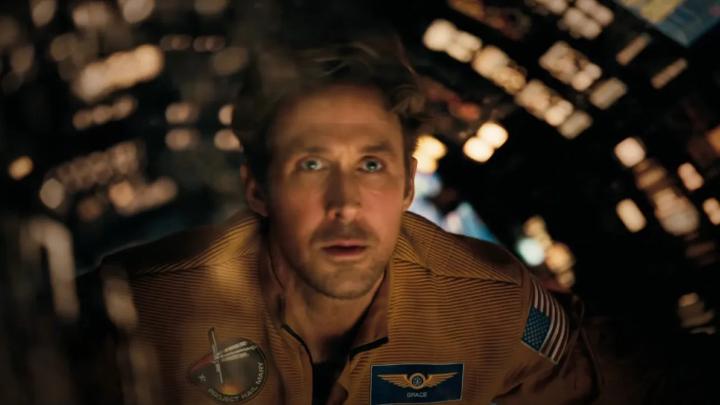
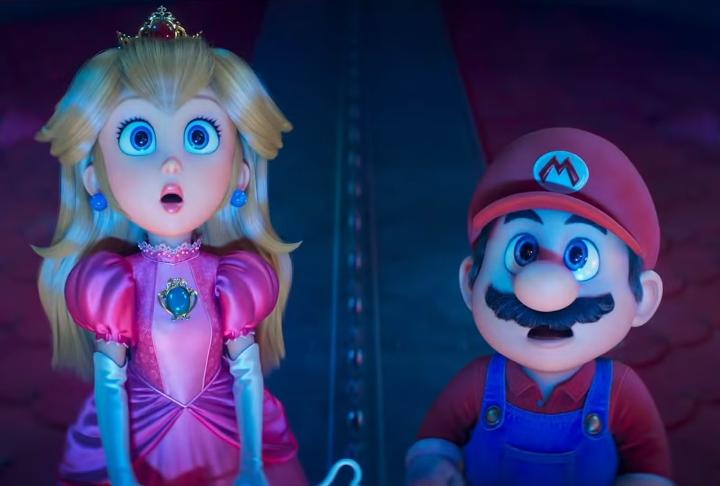
The U.S. domestic box office is up 23% year-on-year. Ryan Gosling's "Project Hail Mary" has just become the year's first true blockbuster, hauling in $164 million domestically and $300 million internationally in just 10 days. And with "The Super Mario Galaxy Movie" tracking suggests that it will have a $160-million-plus five-day debut, these blockbusters look poised to shatter what's left of the post-pandemic gloom. On paper, the vibes should be immaculate.
In practice, the picture is considerably more complicated.
The Elephant in the (Dolby) Colosseum
No preview of CinemaCon 2026 can avoid what has become the dominant story in theatrical exhibition: Paramount Skydance's $111 billion acquisition of Warner Bros. Discovery. The deal, announced on February 27 after one of Hollywood's most dramatic bidding wars in years, would unite two of the industry's most storied studios and create a sprawling entertainment conglomerate encompassing everything from Harry Potter and Superman to SpongeBob and "The Godfather."
The road to Paramount's victory was anything but straightforward. Netflix initially secured an agreement in December 2025 to acquire WBD's studio and streaming assets in a deal valued at roughly $82.7 billion, sparking genuine alarm among exhibitors. Cinema United (the trade body formerly known as NATO, which hosts CinemaCon) warned the Senate antitrust subcommittee in February that a Netflix takeover could prove "economically and culturally catastrophic" for the exhibition sector. James Cameron wrote to Senate lawmakers describing Netflix's proposed 17-day theatrical window as "ridiculously short." But Paramount launched a hostile counter-bid, raised its offer to $31 per share, and on February 26 Netflix declined to match, calling WBD "a 'nice to have' at the right price, not a 'must have' at any price."
The Paramount deal may have removed the immediate spectre of a streaming giant absorbing a major studio, but it raises its own set of profound questions for exhibitors. The merger of two legacy studios means further consolidation of the theatrical pipeline at a time when the number of wide releases is already well below pre-pandemic norms. WBD shareholders are scheduled to vote on the deal on April 23, just a week after CinemaCon wraps, and regulatory scrutiny is far from settled. Expect the merger to dominate corridor conversations, side meetings, and the annual "State of the Industry" address on Tuesday morning. Cinema United's Michael O'Leary used last year's CinemaCon to argue forcefully that the widening gap between tentpole and mid-tier grosses was a structural problem requiring longer windows and more product. This year, with the prospect of two major studios merging into one, that argument takes on a new urgency.
The State of Play: Recovery, Recalibration, or Both?
The raw numbers offer genuine encouragement. Domestic box office revenue is projected to reach between $9.6 billion and $9.8 billion in 2026, which would make it the strongest year since the pandemic and the first to surpass $9 billion since 2023's record recovery. Globally, the market is forecast to clear $35 billion, powered by resurgent international territories (particularly China, where Hollywood product is experiencing a notable rebound) and a slate that is, at last, heavy with proven franchise IP.
Yet the recovery narrative comes with caveats. The number of wide releases from the five legacy MPA majors has been sliding steadily, currently tracking at just 56 titles for 2026, down from a consistent 59 across the three previous years. Pre-pandemic, the industry averaged roughly 120 wide releases annually. The gap has been partly filled by Amazon MGM's aggressive expansion into theatrical, by NEON's continued emergence as a culturally significant distributor, and by newcomers like Angel Studios. But it remains an industry structurally changed from its pre-2019 self, one where exhibitors are competing for fewer films and increasingly reliant on event-level tentpoles to fill screens.
Warner Bros. is illustrative of the broader challenge. The studio arrives at CinemaCon having endured a rough start to 2026, with "The Bride" bombing at $23.2 million globally and "They Will Kill You" dead on arrival at $5 million domestic. CinemaCon will be a chance for the studio to regroup, leaning into a slate that includes "Digger" (Alejandro G. Iñárritu directing Tom Cruise, October), the animated "The Cat in the Hat" (Bill Hader, November), and early looks at 2027 titles like "The Lord of the Rings: The Hunt for Gollum" and a "Minecraft" sequel.
The Studios: What's on Stage
CinemaCon's beating heart remains the major studio presentations in the Colosseum, and this year's lineup is stacked. Here's what to watch for:
Sony Pictures (Monday evening) kicks things off with what should be one of the convention's splashiest presentations. "Spider-Man: Brand New Day," the fourth Tom Holland-led entry due July 31, will command the spotlight, with a new trailer and likely talent appearances. "Beyond the Spider-Verse", hitting theatres in June 2027, should also get a showing after teaser footage was screened last year.
Warner Bros. (Tuesday afternoon) will be eager to generate momentum after its rocky Q1, with "Digger" and "The Cat in the Hat" as likely centrepieces. Look for early chatter about the "Conjuring" and "Lord of the Rings" franchises. The studio's presentation will carry an added charge this year given that WBD shareholders vote on the Paramount acquisition just a week later, on April 23. Expect carefully chosen language about creative continuity and commitment to theatrical - and a conspicuous avoidance of anything that might spook regulators. There is also the "Dune 3" Christmas collision with Disney's "Avengers."
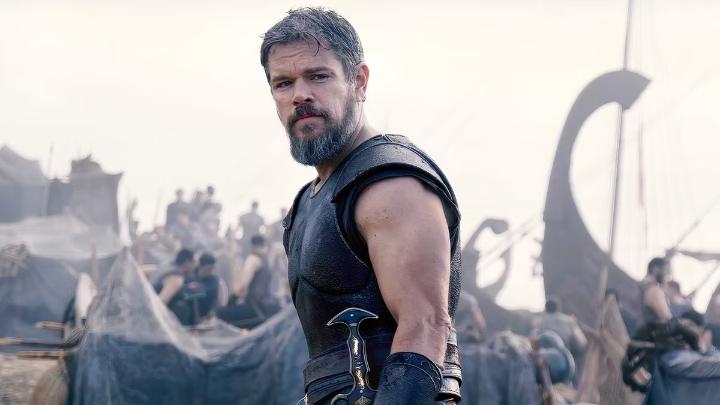
Universal Pictures/Focus Features (Wednesday afternoon) brings arguably the convention's most cinephile-friendly roster. Extended footage from Christopher Nolan's "The Odyssey" (July 17) should have the Colosseum buzzing, and Steven Spielberg's "Disclosure Day" (June 12), his return to science fiction starring Josh O'Connor and Emily Blunt, is an event in itself. On the animation front, "Minions & Monsters," "Forgotten Island," and "Cocomelon: The Movie" round out a family-heavy slate. Horror fans can expect early looks at Mike Flanagan's "Exorcist" reimagining (starring Scarlett Johansson), "Other Mommy" from Blumhouse, and "Violent Night 2." And then there's "Focker-in-Law," the unlikely fourth instalment in the "Meet the Parents" franchise, adding Ariana Grande to the cast for a Thanksgiving release.
Amazon MGM Studios (Wednesday evening) returns for its second consecutive CinemaCon appearance, riding the extraordinary success of "Project Hail Mary," which has validated the company's ambitious pivot to theatrical and made it the studio's highest-grossing release ever. Amazon MGM head of film Courtenay Valenti promised 15 theatrical releases annually by 2027, and the studio arrives in Las Vegas with proof of concept. "Masters of the Universe" (June 5) is likely to receive a major push, alongside whatever else the studio has been keeping under wraps. The real question is whether "Hail Mary's" success signals Amazon MGM as a genuine seventh major or whether it proves to be a one-off lightning strike.
Paramount Pictures (Thursday morning) presents as arguably the most consequential studio in the room this year, albeit for reasons that extend well beyond its immediate release slate. If the WBD acquisition closes as expected in Q3 2026, Paramount will control both its own and Warner Bros.' production pipelines, an unprecedented concentration of theatrical output under one corporate roof. The presentation itself should be lighter in tone: "Scary Movie 6" (June 12), bringing back Marlon, Shawn, and Keenen Ivory Wayans alongside Anna Faris and Regina Hall, and "Jackass 5" should guarantee laughs, while the studio will likely look further ahead to "Children of Blood and Bone" and other developing projects. But exhibitors will be watching for any signals about how David Ellison's combined empire intends to manage two major studios' worth of theatrical releases.
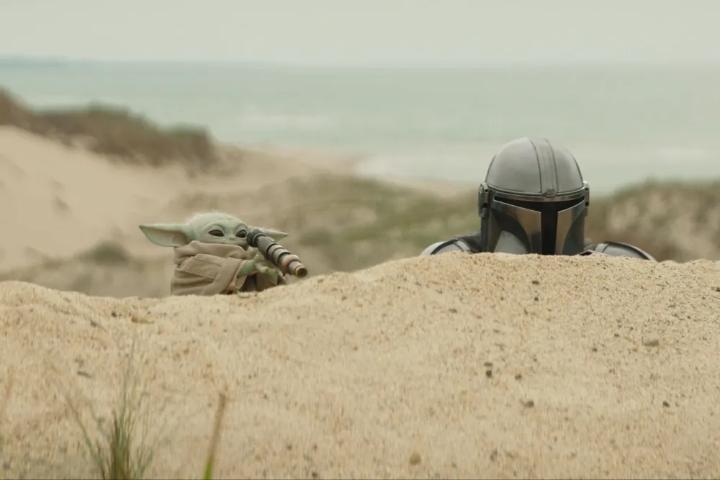
Walt Disney Studios (Thursday afternoon) closes the convention with what is virtually certain to be the week's most headline-grabbing session. "Avengers: Doomsday" (December 18 - unless Disney veers out of the path of WB's "Dune 3" and changes date) is the industry's most anticipated title of the year, and after brief teasers attached to "Avatar: Fire and Ash," CinemaCon should deliver a substantial first look at the Russo Brothers' return to the franchise. Kevin Feige has confirmed the film unites the Avengers, Fantastic Four, Thunderbolts, Wakandans, and the original X-Men against Robert Downey Jr.'s Doctor Doom. Beyond Marvel, "The Mandalorian and Grogu" (May 22) brings Star Wars back to theatres for the first time in seven years; "Toy Story 5" (June 19) continues Pixar's franchise strategy; and a live-action "Moana" (July 10) keeps the remake engine running. Disney distribution chief Andrew Cripps earned the loudest applause at last year's CinemaCon by emphasising the studio's commitment to keeping films in cinemas longer than its competitors, and expect that message to be reinforced.
Beyond the Majors: A Broader Stage
One of CinemaCon 2026's most significant structural changes is the introduction of the "CinemaCon Film Showcase," a new Monday afternoon programme bringing Angel Studios and StudioCanal to the Colosseum stage for the first time. Previously, the main stage was the exclusive preserve of the legacy majors. The addition signals an acknowledgement by Cinema United that exhibition increasingly depends on a diversified pipeline beyond Hollywood's traditional power players.
NEON, which has become one of the most culturally consequential distributors in the industry thanks to titles like "Longlegs," "Anora," and "Parasite," will present separately on Tuesday, likely spotlighting Osgood Perkins' "The Young People" (starring Nicole Kidman) and Damian McCarthy's "Hokum."
GKIDS has also secured a presentation slot, offering a first look at "Godzilla Minus Zero" with Oscar-winning director Takashi Yamazaki making his CinemaCon debut, which is a reflection of anime's growing clout in the theatrical marketplace.
The Tech Floor: Innovation in a Premium-Format World
Beyond the Dolby Colosseum's glamour, the trade show floor across the Julius and Augustus Ballrooms will showcase the technological innovations that exhibitors increasingly depend upon to differentiate the theatrical experience.
Following last year's significant developments in HDR projection and immersive sound, expect continued momentum in these areas. Christie returns with its VDR (Variable Dynamic Range) technology and new Phazer hybrid laser projectors; Barco and Sharp (ex-NEC) are expected to give updates on their latest projection technologies; Samsung, GDC Technology, Vista Group, and Fandango are among the major exhibitors. New educational tracks on Monday morning cover "Immersive Tech Beyond the Screen," "Practical AI for Theater Operations," and "Leveraging Technology to Engage Audiences," reflecting the industry's growing interest in operational AI, energy efficiency, and premium large format (PLF) experiences.
CinemaNext, the European cinema technology specialist, will have a notable presence this year, with the CinemaNext Solutions team on hand to showcase their full range of products. Among the highlights is the PAA40+ Automation Adapter, which introduces real-time power metering and energy reporting, alongside the company's TMS (Theatre Management System) and wider solutions portfolio. With over 40 years of expertise in cinema technology, the CinemaNext Solutions team brings a depth of EMEA market knowledge that complements the show's traditionally North American focus.
The broader technology narrative at CinemaCon 2026 is one of maturation rather than revolution. The questions being asked on the trade floor are increasingly practical: how to reduce energy costs in an era of sustainability pressure, how to optimise scheduling through AI, and how to deploy premium formats at price points that work for independent operators as well as major chains. Sessions on innovative international theatre design - drawing on examples from Asia, Europe, and the Middle East - underscore the global dimension of these conversations.
What Happens in Vegas...
CinemaCon 2026 arrives at a genuinely pivotal moment for theatrical exhibition. The slate is strong. "Project Hail Mary" and "The Super Mario Galaxy Movie" are proving that audiences will turn up in numbers for the right product. Premium formats continue to command growing ticket revenues even as overall attendance patterns shift toward event-driven moviegoing. Amazon MGM's emergence as a serious theatrical player adds a welcome new source of product.
But the Paramount-Warner Bros. mega-merger hangs over everything, raising questions that no amount of exclusive footage or celebrity wattage in the Colosseum can fully answer. When two legacy studios combine, does the theatrical pipeline expand or contract? Will the merged entity maintain both studios' output at current levels, or will rationalisation reduce the number of films reaching cinemas? History offers a cautionary precedent: when Disney acquired 20th Century Fox in 2019, the number of wide releases from the combined entity fell significantly. And with the WBD shareholder vote scheduled for April 23 and regulatory approval still pending, the uncertainty is far from resolved.
"Survive till '25" was the industry rallying cry that never quite delivered the promised recovery. "Survive till '26" may lack the same ring, but with sequels to some of the biggest franchises in cinema history - from Avengers and Spider-Man to Toy Story and Minions - finally arriving, plus new films from Nolan and Spielberg, the building blocks for a genuine rebound are in place.
Whether the exhibition community gets to enjoy it, or whether the ground shifts beneath their feet before they can, is the question that will define not just CinemaCon 2026, but the years that follow.
CinemaCon 2026 runs April 13-16 at Caesars Palace, Las Vegas. To arrange a meeting with the CinemaNext team, contact us.
What to Expect From CinemaCon 2026